Nissan JDM Cars

Nissan built the Japanese-market cars that defined the 1990s import scene: three generations of Skyline GT-R, three generations of Silvia, the Fairlady Z and the Pulsar GTI-R. In 1989 Nissan's 300 PS Fairlady Z and Skyline GT-R triggered the 280 PS limit that shaped every Japanese performance car for 15 years. This hub covers eight archive entries, from the Skyline GT-R (R32) to the Silvia Spec-R (S15), and the dealer channels, engines and codes behind them.

Nissan models at a glance

Nissan entries in the archive with chassis code, production years, engine and official power
ModelChassis codeYearsEnginePower
1971 Nissan Skyline GT-R (KPGC10)KPGC101970-1972S20162 PS (160 hp) at 7,000 rpm
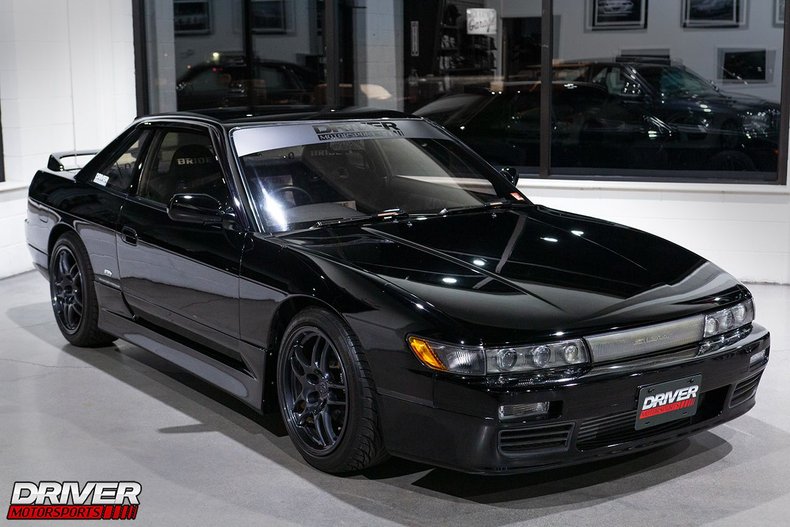
Nissan Silvia S13S131988–1998SR20DET (originally CA18DET/CA18DE, later SR20DE/SR20DET; USDM used KA24E/KA24DE)205 hp (151 kW) @ 6,000 rpm (SR20DET Redtop)
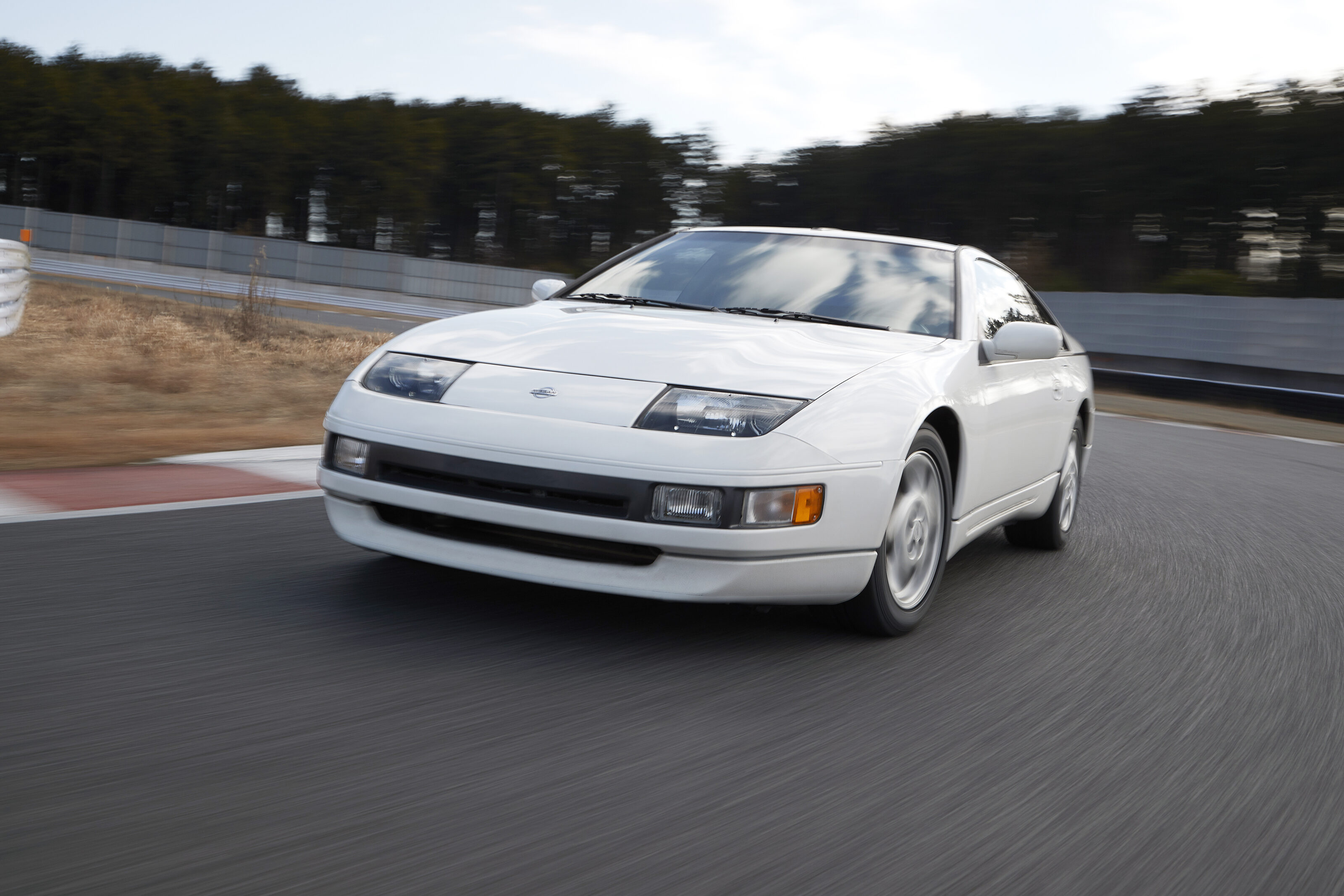
Nissan 300ZX Twin Turbo (Z32)Z321989-1996 (US), 1989-2000 (Japan)VG30DETT300 PS (US), 280 PS (JDM)
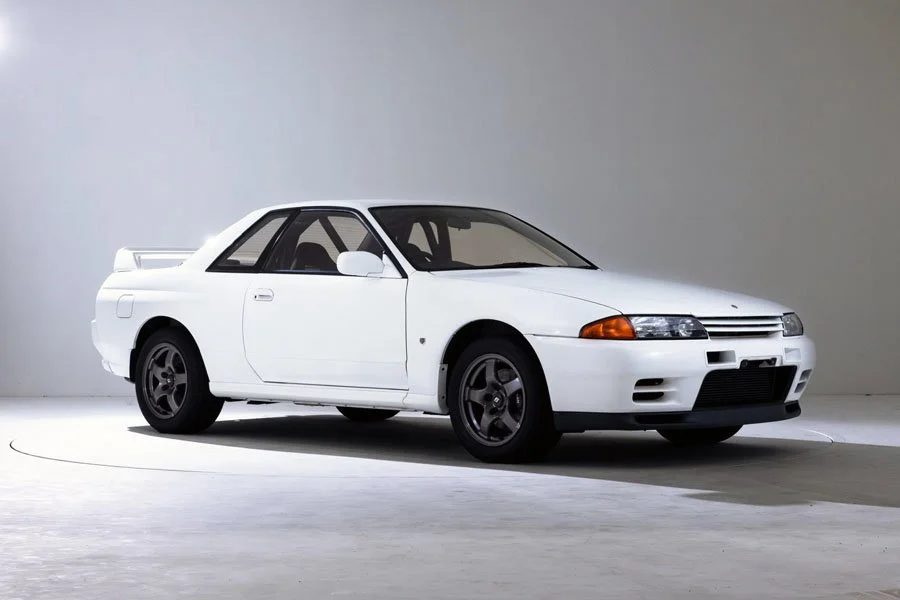
Nissan Skyline GT-R (R32)R321989-1994RB26DETT twin-turbo inline-six276 hp at 6,800 rpm (official/gentlemen's agreement figure); independently dynoed closer to 313 hp, with some period estimates near 320 hp
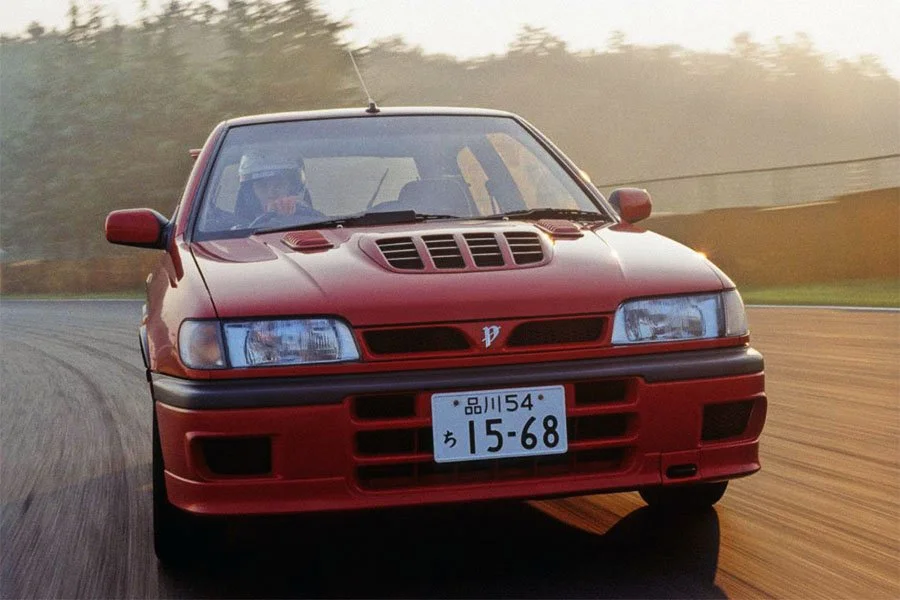
Nissan Pulsar GTI-R (RNN14)RNN141990-1994SR20DET (54C variant), turbocharged DOHC inline-four227hp (230PS) at 6,400rpm (JDM Pulsar); 217hp (220PS) at 6,400rpm (Euro Sunny)
1991 Nissan Figaro (FK10)FK101991-1992MA10ET76 PS at 6,000 rpm
Nissan Silvia S14S141993-1999SR20DE (naturally aspirated) / SR20DET (turbocharged); US 240SX used KA24DE220 PS (SR20DET, JDM, disputed between 197-220 hp depending on source); 145 PS (SR20DE); 140-155 hp (KA24DE, US)
Nissan Skyline GT-R (BCNR33)BCNR331995-1998RB26DETT twin-turbo inline-six276 bhp / 280 PS (206 kW)
1997 Nissan Laurel Sedan (C35)C351997-2002RB25DET280 PS at 6,400 rpm
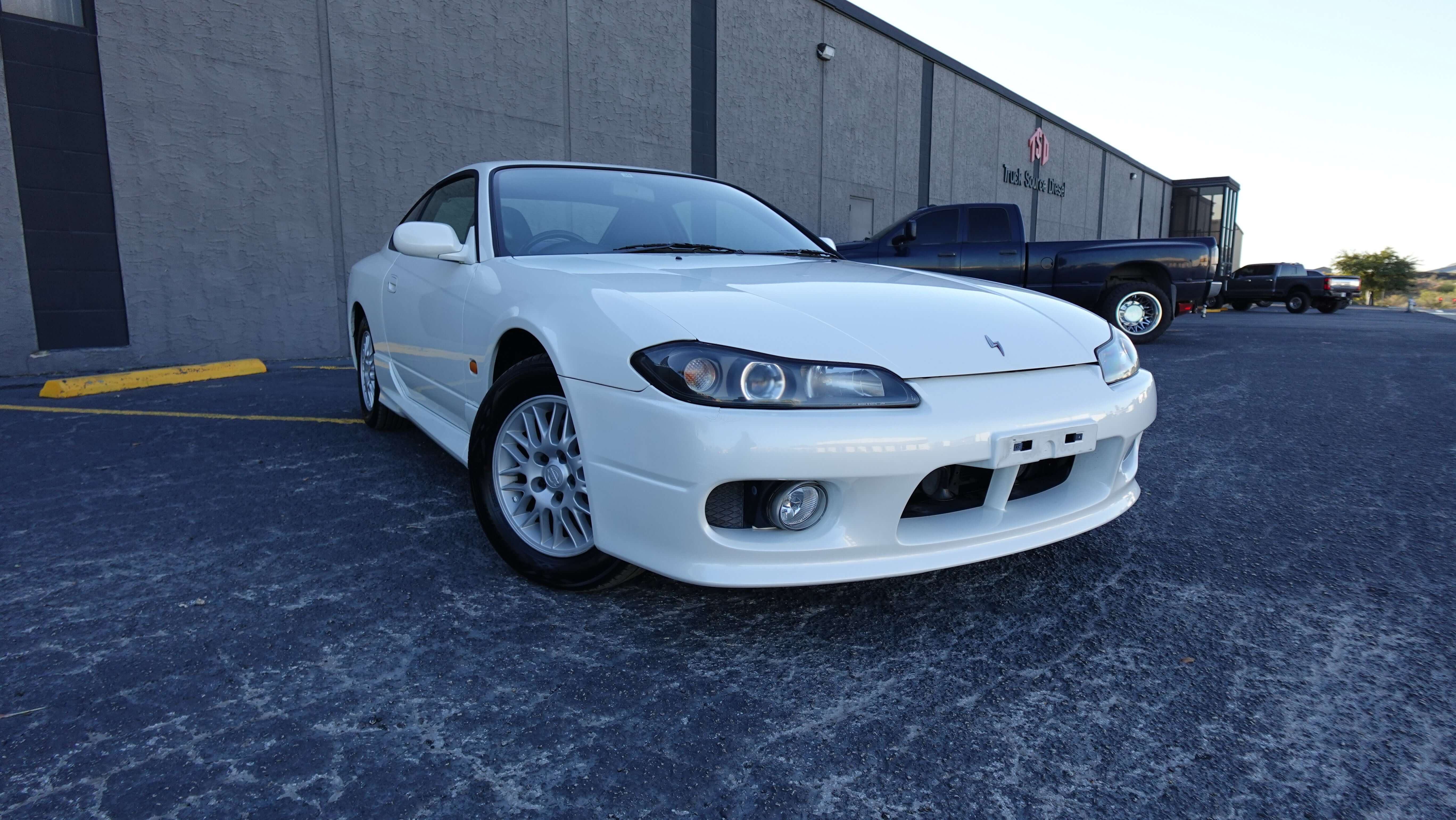
Skyline GT-R V-Spec IIBNR341999-2002RB26DETT276 hp
Silvia Spec-RS151999-2002SR20DET247 hp

Nissan in Japan: Prince Stores and Five Channels

Nissan sold its cars in Japan through separate dealer networks until April 1999, when they merged into Blue Stage and Red Stage. The Skyline belonged to Nissan Prince stores, inherited from Prince Motor in 1966, and was sold only there until January 1999. The Skyline GT-R (R32) went on sale on August 21, 1989, the first GT-R in 16 years, followed by the Skyline GT-R (BCNR33) on January 6, 1995 and the Skyline GT-R V-Spec II (BNR34) generation from January 8, 1999. None was sold in the US; the R34 had small official exports, including to the UK.

The Silvia (S13) went on sale on May 17, 1988 through Sunny and Motor stores and won Japan Car of the Year for 1988–89; its hatchback twin, the 180SX (RPS13), was sold through Prince and Cherry dealers. The Silvia (S14) followed in October 1993, and the Silvia Spec-R (S15) of January 1999 was sold new only in Japan, Australia and New Zealand. Abroad, the S13 and S14 became the 200SX and the 240SX, the latter with KA24 engines, never the SR20DET.

The 300ZX Twin Turbo (Z32) was the Fairlady Z at home, sold through Nissan and Prince stores from July 1989 to September 2000, four years after US sales stopped. The Pulsar GTI-R (RNN14) arrived in August 1990; Europe got it as the Sunny GTI-R.

RB26DETT, SR20DET and ATTESA E-TS

RB26DETT means the RB family, 2.6 liters, dual overhead cams (D), electronic fuel injection (E) and twin turbochargers (TT). The 2,568 cc inline-six in the Skyline GT-R (R32) was rated 280 PS (206 kW) at 6,800 rpm and 36.0 kgm (353 N·m) at 4,400 rpm; the Skyline GT-R (BCNR33) and Skyline GT-R V-Spec II (BNR34) kept 280 PS, with torque rising to 37.5 kgm (368 N·m) in the R33. Stock cars dyno at about 300 hp. The engine also powered the Autech Stagea 260RS (WGNC34) wagon, 1997–2001.

ATTESA E-TS, Advanced Total Traction Engineering System for All Terrain with Electronic Torque Split, is rear-biased all-wheel drive that sends torque forward when the rear wheels slip. The R32 paired it with Super HICAS four-wheel steering; the R33 V-Spec and R34 used E-TS Pro with an active rear differential, and the R34 added a Getrag six-speed gearbox.

The SR20DET is the 2.0-liter turbo four behind the Silvia. It replaced the 175 PS CA18DET in the Silvia (S13) in January 1991 at 205 PS (151 kW), rose to 220 PS (162 kW) in the Silvia (S14) and reached 250 PS (184 kW) in the Silvia Spec-R (S15). The Pulsar GTI-R (RNN14) used a 230 PS (169 kW) version with full-time ATTESA 4WD. The 300ZX Twin Turbo (Z32) is the outlier: a VG30DETT V6 twin turbo rated 280 PS in Japan, 300 PS abroad.

Motorsport: Group A, JGTC and Rally

The Skyline GT-R (R32) was built for Group A. It won all 29 races it entered in the Japanese Touring Car Championship and the title every year from 1990 to 1993; a Nismo edition of 560 cars released in February 1990 was the homologation base. In Australia it took the touring car titles and the Bathurst 1000 in 1991 and 1992, where the Wheels magazine nickname "Godzilla" took hold, and it won the 1991 Spa 24 Hours outright.

In the JGTC, Masahiko Kageyama won the first two GT1 titles in 1994 and 1995 in a Skyline GT-R, the Pennzoil Nismo GT-R won GT500 in 1998 and 1999, the latter in the Skyline GT-R V-Spec II (BNR34) generation's first season, and the Xanavi Nismo GT-R won in 2003. Nismo also raced Skyline GT-R (BCNR33) based cars at Le Mans in 1995 and 1996 and built 44 of the Nismo 400R (BCNR33).

A Silvia (S14) won the 1997 JGTC GT300 title, and the Silvia Spec-R (S15) won the D1 Grand Prix drift title in the series' first season, 2001, and again in 2004. The Pulsar GTI-R (RNN14) was Nissan's Group A rally homologation car; it never won a World Rally Championship event, with a best of third in Sweden in 1992, when Nissan withdrew. The 300ZX Twin Turbo (Z32) won the IMSA GTS class at Daytona, Sebring and Le Mans in 1994.

Reading Nissan Chassis Codes

Nissan codes end with the model series letter and generation number: R32 to R34 for the Skyline, S13 to S15 for the Silvia, Z32 for the Fairlady Z, N14 for the Pulsar. Letters in front describe the specification. Japanese sources confirm one: a C in the second position marks a HICAS-equipped car, so the Skyline GT-R (BCNR33) carries a C and the GTS25 (ER33) does not.

Enthusiast guides read the rest of the Skyline prefix as B for the RB26, E for the RB25, H for the RB20, N for four-wheel drive and R for the Skyline chassis. On that reading the Skyline GT-R (R32) is BNR32, the Skyline GT-R V-Spec II (BNR34) is BNR34, and the rear-drive Skyline GTS-t Type M (HCR32) is an RB20 car with HICAS. The letters are not universal: in the Pulsar GTI-R (RNN14) the N is the Pulsar's series letter.

Silvia codes follow the engine. The CA18 Silvia (S13) is S13, the SR20 car is PS13, and the 180SX (RPS13) adds R for the hatchback. For the Silvia (S14), zenki means cars before the June 11, 1996 facelift and kouki those after. The sources reviewed for this page do not explain the full 300ZX Twin Turbo (Z32) prefix.

Buying and Importing a JDM Nissan

The US 25-year rule counts from the month of manufacture. Every Skyline GT-R (R32), built to November 1994, has been eligible since November 2019, and every Skyline GT-R (BCNR33), built to November 1998, since November 2023. The Skyline GT-R V-Spec II (BNR34) and the Silvia Spec-R (S15), both built from January 1999 to August 2002, are partway through: as of November 2026, cars built through November 2001 qualify, and the rest, including the February 2002 Nür editions, follow during 2027. The Silvia (S13), Silvia (S14), 300ZX Twin Turbo (Z32) and Pulsar GTI-R (RNN14) are all eligible; see the import guide.

The Nismo Heritage program, run by Nissan, Nismo and Autech Japan, started in December 2017 with nearly 80 parts for the R32 GT-R and added the R33 and R34 in November 2018, about 160 items sold in Japan. No equivalent program covers the Silvia, Fairlady Z or Pulsar.

Common issues across the range:

  • RB26 oil pump drive: the crank collar is the most cited failure point; check for an upgrade.
  • Gearbox synchros: documented on the R33 and on the S15's third and sixth gears.
  • Rust: strut towers, trunk floor and jack points on Skylines; rear arches on the S15.
  • VG30DETT timing belt: an interference engine; the interval is 60,000 miles or 48 months.

Nissan models

11 entries

FAQs

What does BNR32 mean?

BNR32 is the chassis code of the Skyline GT-R (R32), built from August 1989 to November 1994. R32 is the Skyline's eighth-generation series code. Enthusiast guides read the prefix as B for the RB26DETT engine and N for four-wheel drive; Japanese sources confirm the pattern only in part, for example that a C marks HICAS steering, as in the R33 GT-R's code BCNR33.

Why does the R33 GT-R have the code BCNR33 but the R34 is BNR34?

The C stands for HICAS, Nissan's four-wheel steering. Japanese sources confirm that a C in the second position of a Skyline code marks a HICAS-equipped car, so the Skyline GT-R (BCNR33) is BCNR33 while the non-HICAS GTS25 is ER33. Nissan did not carry the C into the R34 codes, so the Skyline GT-R V-Spec II (BNR34) is BNR34; the sources reviewed for this page do not explain why the format changed.

Was the Nissan Skyline GT-R ever sold in the US?

No. The Skyline GT-R (R32) was sold only in Japan, with small official exports to Hong Kong, Australia and New Zealand from 1991. The Skyline GT-R (BCNR33) and Skyline GT-R V-Spec II (BNR34) had limited UK sales through Middlehurst Nissan. Every GT-R in the US arrived under the 25-year rule or the Show or Display exemption.

What is the difference between a Silvia and a 240SX?

The 240SX was the North American version of the Silvia (S13) and Silvia (S14), sold with 2.4-liter KA24E or KA24DE engines of 140–155 hp. Japanese Silvias used the 1.8-liter CA18DET and, from January 1991, the 2.0-liter SR20DET turbo of 205–220 PS. The SR20DET was never fitted to a US-market car, and the Silvia Spec-R (S15) was never sold in North America at all.

When can the S15 Silvia be imported to the US?

Cars built through November 2001 are eligible as of November 2026. The Silvia Spec-R (S15) was built from January 1999 to August 2002, and the US 25-year exemption counts from the month of manufacture, so the earliest cars qualified in January 2024 and the last cars qualify in August 2027. Australian and New Zealand 200SX versions follow the same rule by build date.

Why are Nissan JDM cars rated 280 PS?

Because Nissan started the limit. In 1989 the Fairlady Z, sold in the US as the 300ZX Twin Turbo (Z32), the Skyline GT-R (R32) and the Infiniti Q45 were the first Japanese cars to reach 300 PS. The Ministry of Transport intervened, Nissan cut all three to 280 PS, and the industry adopted the figure as a ceiling until 2004. Export Z32s kept 300 PS. The Gentleman's Agreement guide has the full story.

What does ATTESA E-TS stand for?

Advanced Total Traction Engineering System for All Terrain with Electronic Torque Split. It is the all-wheel-drive system introduced on the Skyline GT-R (R32) in 1989: rear-wheel drive in normal running, with torque sent to the front wheels when sensors detect slip. The Skyline GT-R (BCNR33) V-Spec and Skyline GT-R V-Spec II (BNR34) used the E-TS Pro version with an active rear differential. The Pulsar GTI-R (RNN14) used a simpler full-time ATTESA.

Does Nissan still make parts for the Skyline GT-R?

Yes. The Nismo Heritage program, run by Nissan, Nismo and Autech Japan, began in December 2017 with nearly 80 reproduction parts for the Skyline GT-R (R32) and added the Skyline GT-R (BCNR33) and Skyline GT-R V-Spec II (BNR34) in November 2018, taking the range to about 160 items. Parts are sold in Japan. The sources reviewed for this page record no similar program for the Silvia or Fairlady Z.