 Toyota
SW20
1989 Toyota MR2 (SW20)
- 原動機Engine
- 3S-GTE
- 最高出力Power
- 200 hp (US Turbo) to 245 PS at 6,000 rpm (late JDM Turbo)
- 駆動Drive
- Mid-engine, rear-wheel drive
- 変速機Trans.
- E153 manual (Turbo); automatic available on the G-Limited
Toyota's Japan-market performance cars were sold through separate dealer channels, each with its own badges, grades and sometimes its own engines. This page explains those channels, the engine and chassis codes behind them, and which cars reached the US under other names. The archive holds the Sprinter Trueno GT-Apex, the Supra RZ, the Celica GT-Four ST205, the Celica SS-II and the Altezza RS200.
| Model | Chassis code | Years | Engine | Power |
|---|---|---|---|---|
| Sprinter Trueno GT-Apex | AE86 | 1983-1987 | 4A-GE | 128 hp |
| 1989 Toyota MR2 (SW20) | SW20 | 1989-1999 | 3S-GTE | 200 hp (US Turbo) to 245 PS at 6,000 rpm (late JDM Turbo) |
| 1989 Toyota Celica GT-Four (ST185) | ST185 | 1989-1993 | 3S-GTE | 225 PS at 6,000 rpm (Japan); 204 bhp (export) |
| 1989 Toyota Starlet GT Turbo (EP82) | EP82 | 1989-1995 | 4E-FTE | 135 PS at 6,400 rpm |
| 1990 Toyota Sera (EXY10) | EXY10 | 1990-1995 | 5E-FHE | 110 PS at 6,400 rpm |
| 1991 Toyota Soarer 2.5GT-T (JZZ30) | JZZ30 | 1991-2001 | 1JZ-GTE | 280 PS at 6,200 rpm |
| Supra RZ BBB | A80 | 1993-2002 | 2JZ-GTE | 276 hp |
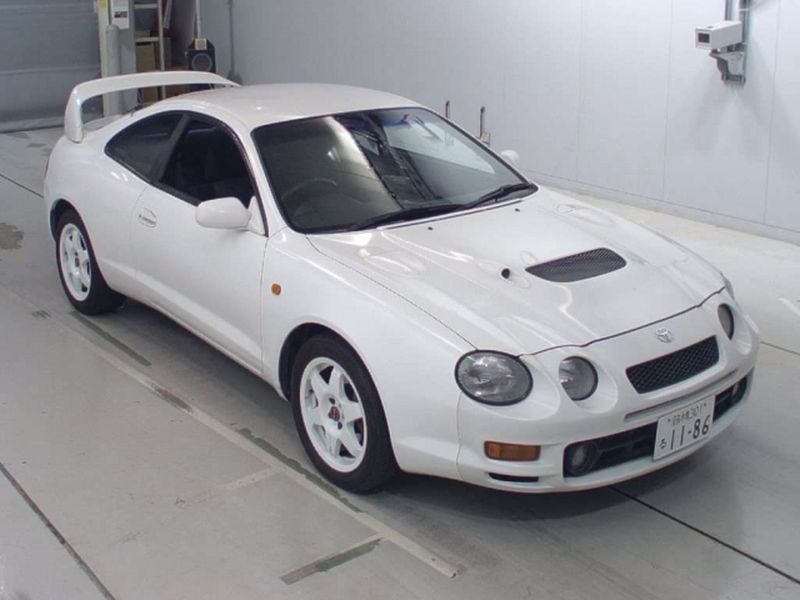
| Toyota Celica GT-Four ST205 | ST205 | 1994-1999 | 3S-GTE turbocharged inline-four (16-valve DOHC, Yamaha-designed aluminum head) | Up to 255 PS (188 kW) at 6,000 rpm (JDM spec); 242 hp (UK/Europe/Australia); 239 hp (US grey-market spec) |
| 1996 Toyota Chaser JZX100 Tourer V | JZX100 | 1996-2001 | 1JZ-GTE | 280 PS at 6,200 rpm |
| 1997 Toyota Aristo V300 (JZS161) | JZS161 | 1997-2004 | 2JZ-GTE | 280 PS at 5,600 rpm |
| 1998 Toyota Altezza RS200 (SXE10) | SXE10 | 1998-2005 | 3S-GE BEAMS | 210 PS at 7,600 rpm (manual); 200 PS at 7,000 rpm (automatic) |
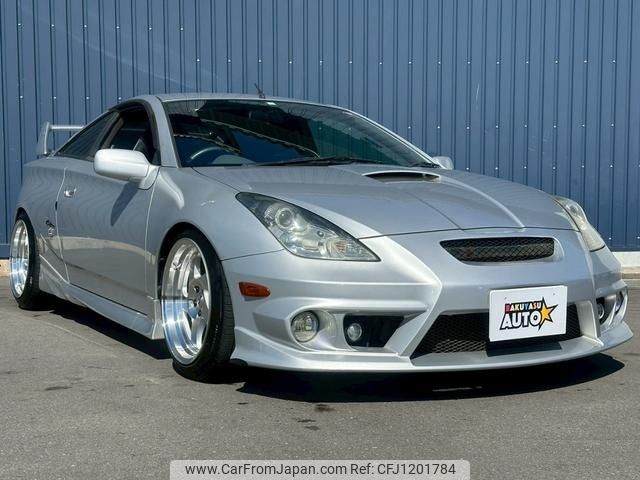
| Celica SS-II | ZZT231 | 1999-2006 | 2ZZ-GE | 187 hp |
Toyota ran parallel dealer networks in Japan until full-lineup sales began nationwide in May 2020. The Toyota Store came first, with one dealer per prefecture by 1946. The Toyopet Store split from it, the Corolla Store opened in 1961, the Auto Store opened in April 1968 to sell the Corolla Sprinter, and the Vista Store ran alongside until it merged into Netz in May 2004.
The channels explain the twins in this archive. The Sprinter Trueno was an Auto Store car, while the Corolla Levin GT APEX (AE86) sold the same platform through Corolla Stores with fixed headlights instead of pop-ups. Celicas went through Corolla Stores, including the GT-Four ST205 of February 1994, of which 2,100 of 2,500 homologation cars stayed in Japan, and the front-drive SS-II of September 1999. The Auto Store became Netz Toyota on August 23, 1998, and the Altezza of October 30, 1998 was its first new model.
Exports changed the names. The AE86 went to North America as the Corolla GT-S, the Altezza became the Lexus IS, and the Celica SS-II was the Celica GT-S abroad. The Supra, on sale from May 24, 1993, kept its name but not its grades: RZ, SZ and GZ were Japanese names, and the US had the Supra Turbo until the 1998 model year. The Supra ended in July 2002 when it could not meet the fiscal 2000 emissions rules, after about 31,500 Japanese cars.
Toyota engine codes read as a model number, a family and a suffix. The number is the engine model within the family (3S is the third S engine), and the suffix letters mean G for a performance DOHC head, T for a turbocharger and E for multi-point injection. So the Trueno's 4A-GE is a performance-head, injected A-series four, and the Supra RZ's 2JZ-GTE adds the turbo.
The 4A-GE made 130 PS (96 kW) gross with a 7,600 rpm redline and T-VIS intake valves opening above 4,500 rpm. The S family covers two archive cars: the 3S-GTE turbo in the GT-Four ST205 at 255 PS (188 kW) for Japan against 242 PS for export, and the naturally aspirated 3S-GE in the Altezza RS200 at 210 PS (154 kW) at 7,600 rpm with titanium valves and a six-speed manual. The Celica SS-II moved to the 2ZZ-GE, 190 PS (140 kW) at 7,600 rpm with VVTL-i, and offered Super Strut front suspension as a package.
The 2JZ-GTE is the outlier. Japanese Supra turbos were rated 280 PS (206 kW) at 5,600 rpm with 44.0 kgm (431 N·m), rising to 46.0 kgm (451 N·m) with VVT-i in August 1997, while export cars were rated about 320 hp. The RZ's six-speed V160 was co-developed with Getrag, and Japanese sources call it the first six-speed manual in a Japanese-built passenger car.
Toyota's rally program ran through Toyota Team Europe in Cologne. Carlos Sainz won the 1990 drivers' title in the Celica GT-Four (ST165) and the 1992 title in the Celica GT-Four (ST185), and the ST185 took both titles with Juha Kankkunen in 1993 and Didier Auriol in 1994. The ST205 was the homologation base from 1994; in 1995 the FIA found an illegal turbo air restrictor on the works cars and banned the team for 12 months. Toyota's third manufacturers' title came in 1999 with the Corolla WRC, built on the Corolla Levin BZ-R (AE111), after which it left rallying for Formula One and CART.
The AE86 was a touring-car success rather than a rally car. It won the 1986 ETCC Division 1 manufacturers' championship, Chris Hodgetts took the 1986 and 1987 BTCC drivers' titles in a Corolla GT, and its best WRC result was third at the 1989 Rallye Côte d'Ivoire. In Japan, Keiichi Tsuchiya raced a Levin in the JTC and popularized drifting with it.
The Supra A80 raced in JGTC GT500 from 1994 and won four championships, including 1997 with TOM'S, running a 3S-GTE from 1995. The Altezza and Celica SS-II have no works record in the sources reviewed for this page.
Toyota model codes read engine family, platform, generation and variation. The platform letter is the key: E is Corolla, Sprinter and Levin; A is the rear-drive Celica, Carina and Supra; T is the front- and all-wheel-drive Celica, Corona and Carina.
Grade names follow the engine. GT APEX was the AE86's top grade and GTV its sports grade; SS-II is the Celica grade with the 3S-GE and later the 2ZZ-GE; RS200 and AS200 tell you the Altezza's engine; and the Supra ran SZ, SZ-R, RZ, RZ-S and GZ.
The US 25-year rule counts from each car's date of manufacture. Every AE86 (May 1983 to July 1987) and every Celica GT-Four ST205 (February 1994 to June 1999) is eligible. The Supra A80 started in May 1993, so cars built through November 2001 qualify now and the last July 2002 cars follow in 2027. The Altezza RS200 has qualified since October 2023 and the Celica SS-II since September 2024. How to Import a JDM Car to the USA covers the process.
Toyota's factory support runs through the GR Heritage Parts Project. The GR Heritage Parts Project announced A70 and A80 Supra parts on January 9, 2020, including A80 headlights, door handles and brake boosters, so the Supra 2.5 Twin Turbo R (JZA70) is covered. AE86 parts went on sale in November 2021, and on September 10, 2025 Toyota Gazoo Racing added 4A-GE cylinder head and block sub-assemblies.
Toyota Toyota
 Toyota
 Toyota
 Toyota
 Toyota
 Toyota
 Toyota
 Toyota
 Toyota
 Toyota
 Toyota
AE86 is Toyota's model code for the 1983 to 1987 rear-drive Corolla Levin and Sprinter Trueno: A for the 4A engine family, E8 for the E80-series Corolla and Sprinter generation, and 6 for the variant. The Japanese nickname "hachi-roku" means eight-six. The AE85 is the same body with a 1.5-liter 3A-U engine.
They are the same AE86 car sold through different Toyota dealer channels in Japan. The Sprinter Trueno came from the Auto Store and has pop-up headlights; the Corolla Levin came from the Corolla Store and has fixed headlights. Trueno is Spanish for thunder and Levin is Middle English for lightning. Both were sold in North America as the Corolla GT-S.
Under the US 25-year rule, counted from the date of manufacture, every AE86 and every Celica GT-Four ST205 is eligible, as is any Supra A80 built through November 2001. The Altezza RS200 has qualified since October 2023 and the Celica SS-II since September 2024. The JDM Cars Turning 25 in 2026 guide lists the dates.
Because the Supra A80 sold in Japan was rated under the industry's 280 PS self-regulation, while export cars were rated at about 320 hp. The Japanese 2JZ-GTE made 280 PS (206 kW) at 5,600 rpm with 44.0 kgm, rising to 46.0 kgm with VVT-i from August 1997. Japan's Gentleman's Agreement Explained covers the rule.
No. The ST205 went to Japan, Europe, Australia and New Zealand, with 2,100 of the 2,500 homologation cars staying in Japan. The US received only the earlier ST165 and ST185 as the Celica All-Trac Turbo. Every ST205 in the US is an import, and all of them have been eligible under the 25-year rule since June 2024.
The Altezza is the Japanese name for the car sold abroad as the first-generation Lexus IS from 1999. The RS200's 210 PS (154 kW) 3S-GE four-cylinder and six-speed manual stayed in Japan; Europe got the IS 200 with the 1G-FE six and North America the IS 300 with the 2JZ-GE. The Altezza was sold through Netz Stores and won the 1998–1999 Car of the Year Japan.
Yes, through the GR Heritage Parts Project. Toyota announced reproduction parts for the A70 and A80 Supra on January 9, 2020, and AE86 parts went on sale in November 2021. On September 10, 2025 Toyota Gazoo Racing added 4A-GE cylinder head and block sub-assemblies, and 29 AE86 parts had been reproduced by February 2026.
SS-II is a Japanese grade name used on the sixth- and seventh-generation Celica. On the ZZT231 Celica SS-II of 1999 it marks the 190 PS (140 kW) 2ZZ-GE engine, against the 145 PS 1ZZ-FE in the SS-I, and Super Strut suspension was an option. North America sold the same car as the Celica GT-S.