 Honda
HA3
1990 Honda Acty Truck (HA3/HA4)
- 原動機Engine
- E07A
- 最高出力Power
- 38 PS at 5,300 rpm
- 駆動Drive
- Mid-engine, rear-wheel drive or real-time 4WD with viscous coupling
- 変速機Trans.
- Four- or five-speed manual; three-speed automatic (2WD only)
Honda built its Japanese-market reputation on high-revving naturally aspirated engines rather than turbocharging. The Type R series began with the NSX in November 1992 and the Integra in October 1995, and its four-cylinder cars reached 125 PS per liter with the S2000's F20C. This hub covers seven archive entries, from the NSX-R (NA1) to the Civic Type R (FD2), and explains the dealer channels, engines, codes and import dates that connect them.
| Model | Chassis code | Years | Engine | Power |
|---|---|---|---|---|
| 1990 Honda Acty Truck (HA3/HA4) | HA3 | 1990-1999 | E07A | 38 PS at 5,300 rpm |
| NSX-R | NA1 | 1992-1995 | C30A | 276 hp |
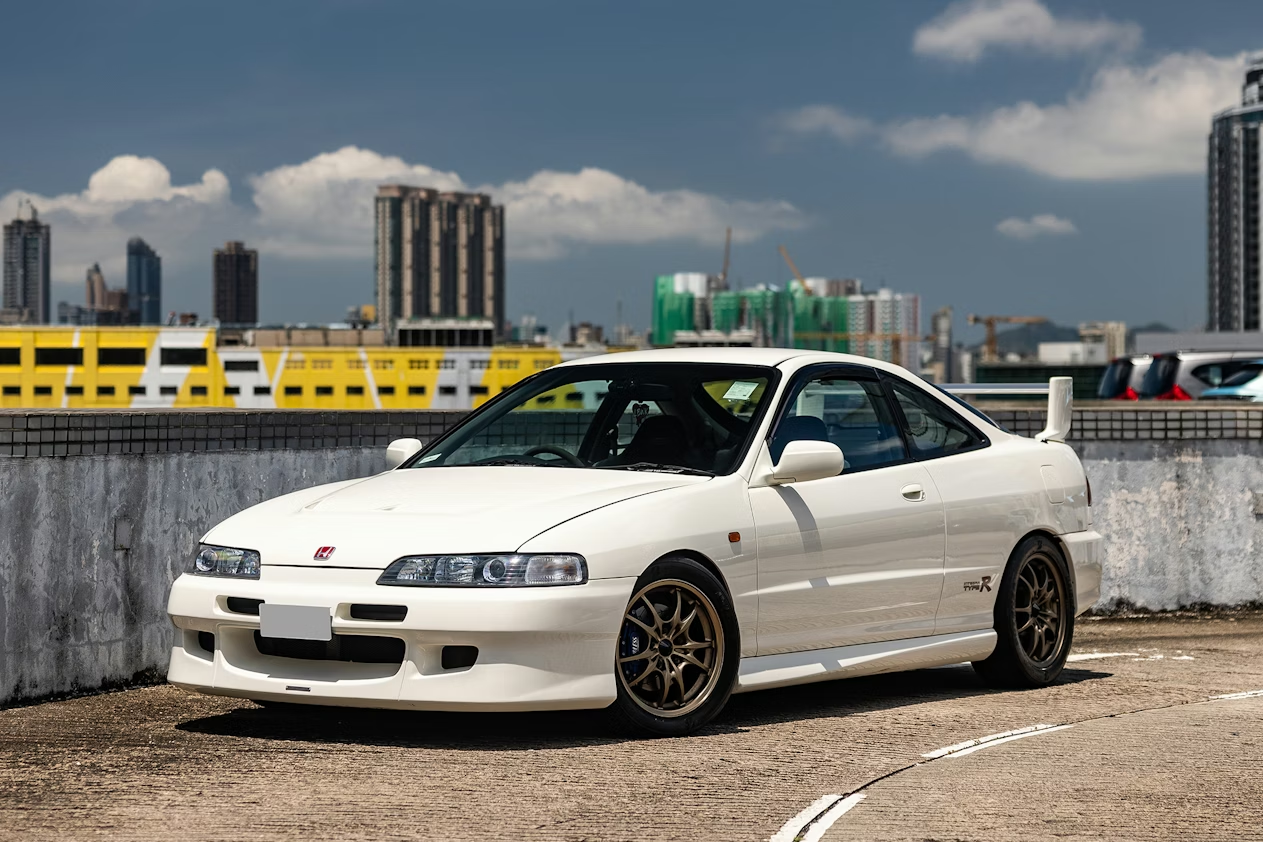
| Integra Type R | DC2 | 1995-2001 | B18C | 197 hp |
| Honda Prelude (BB6) Type S | BB6 | 1996-2001 | H22A "red-top" DOHC VTEC four-cylinder | 220 PS (162kW) at 7,200 rpm |
| Civic Type R | EK9 | 1997-2000 | B16B | 182 hp |
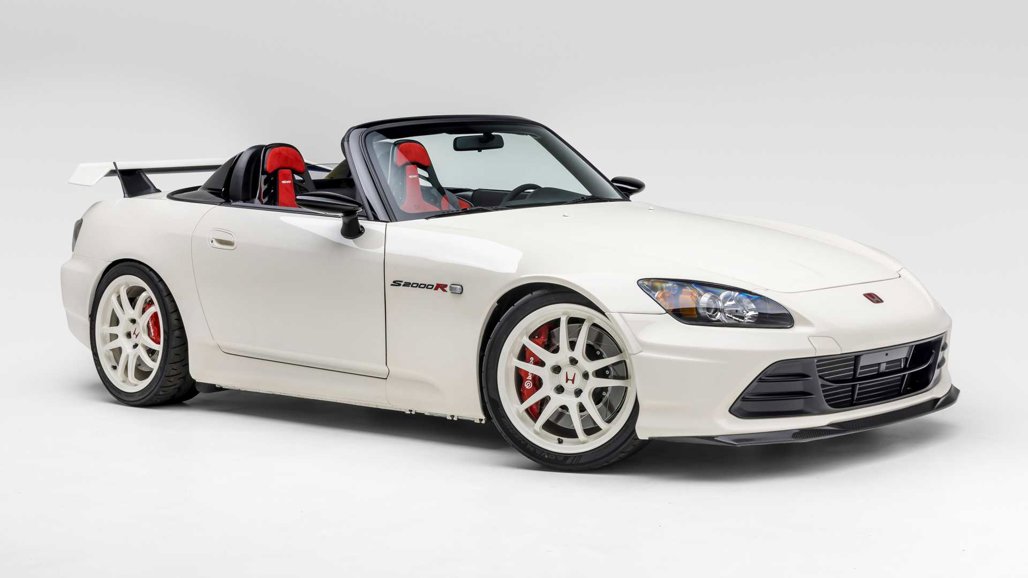
| Honda S2000 (AP1) | AP1 | 1999–2003 (Japan); 2000–2003 (U.S.) | F20C, naturally aspirated inline-four DOHC VTEC | 177–184 kW (241–250 PS / 237–247 hp), depending on market |
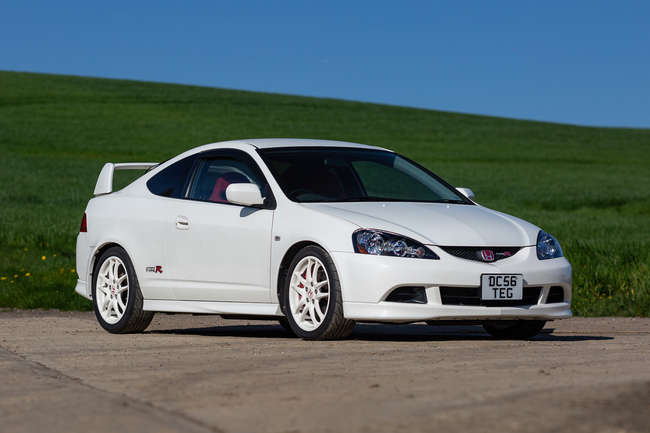
| Honda Integra Type R (DC5) | DC5 | 2001-2006 | K20A naturally aspirated inline-four, DOHC, i-VTEC | 217 bhp (220 PS / 162 kW) at 8,000 rpm |
| 2007 Honda Civic Type R (FD2) | FD2 | 2007-2010 | K20A | 225 PS at 8,000 rpm |
Honda sold cars in Japan through three dealer channels until 2006. Verno opened in November 1978 for the Prelude and carried the sporty models: the Prelude Type S (BB6), the Integra, the NSX-R (NA1) and the S2000 (AP1). Primo, from 1985, sold the Civic and kei cars such as the Beat (PP1); Clio, from 1984, sold the Accord and Legend. All stores sold every model from March 1, 2006 and became Honda Cars that July.
The Type R series grew inside that structure. The NSX Type R was added on November 27, 1992, the Integra Type R (DC2) went on sale on October 16, 1995 with the four-door Integra Type R (DB8), and the Civic Type R (EK9) arrived on August 22, 1997. The Integra Type R (DC5) of July 2, 2001 absorbed the Prelude, discontinued in 2001. The Civic Type R (FD2) of March 29, 2007 was the only four-door Type R.
Export history varies. The EK9 was the only Civic Type R never sold outside Japan, while the DC2 reached the US as the Acura Integra Type R from 1997 to 2001, 3,823 cars at 195 hp. The DC5 Type R went to Japan and Oceania, the FD2 to Japan and Malaysia; the NSX-R and Prelude Type S stayed home, the S2000 sold worldwide.
VTEC stands for Variable Valve Timing & Lift Electronic Control: two cam profiles per cylinder, with a hydraulic pin that locks the rockers to the high-lift lobe above a switch point set by the ECU. The first production DOHC VTEC was the B16A of the 1989 Integra XSi; the K-series i-VTEC of 2001 added continuous intake cam phasing.
Honda's engine codes read directly: the letter is the family, the digits the displacement, the suffix the variant. The B16B in the Civic Type R (EK9) makes 185 PS (136 kW) at 8,200 rpm and 16.3 kgm (160 N·m) from 1.6 liters. The B18C in the Integra Type R (DC2) gives 200 PS (147 kW) at 8,000 rpm and 18.5 kgm, with hand-polished ports on early engines and higher compression than the US B18C5. The H22A in the Prelude Type S (BB6) makes 220 PS (162 kW) at 7,200 rpm.
The K20A carried the series into the 2000s: 220 PS (162 kW) at 8,000 rpm in the Integra Type R (DC5) and 225 PS (165 kW) in the Civic Type R (FD2). The F20C of the S2000 (AP1) reached 250 PS (184 kW) at 8,300 rpm, about 125 PS per liter, a naturally aspirated record until 2010. The C30A V6 in the NSX-R (NA1) was rated 280 PS (206 kW) at 7,300 rpm, in the world's first all-aluminum monocoque production car.
Honda's Japanese racing record rests on touring cars rather than homologation specials. In the Group A era the Civic took the under-1,600 cc drivers' title in the Japanese Touring Car Championship six times between 1986 and 1993, the last two with the Civic SiR (EG6). In the Super Touring JTCC, the Accord won the drivers' title in 1996 and 1997.
The NSX-GT raced in the JGTC and Super GT from 1997 to 2009, taking 36 wins, two drivers' titles and three teams' titles; the 2000 Castrol Mugen x Dome car won the championship without a race win, and ARTA won in 2007. At Le Mans, the Team Kunimitsu NSX won the GT2 class in 1995. The road-going NSX-R (NA1) predates that program; the NSX-R (NA2) of 2002 followed it.
The Type R cars raced mostly in one-make series: the Civic Type R (EK9), then the Integra Type R (DC5) from 2002 to 2007, then an FD2-based Civic Mugen RC from 2008. The EK9's N1 Motor Sports edition, about 200 cars without ABS, power steering or air conditioning, was a base for N1 endurance racing, not a homologation run. Abroad, the Integra Type R (DC2) won six consecutive SCCA World Challenge touring titles from 1997 to 2002, and Team Dynamics converted imported DC5s to win the BTCC in 2005 and 2006.
A Japanese Honda model code has a regulatory prefix and a body code. The prefix changed with emissions rules, so early Type Rs are E-DC2 or E-EK9 and cars built after the 1998 regulations are GF-DC2 or GF-EK9. The body code is what enthusiasts use: NA1 for the NSX-R (NA1), DC2 for the Integra Type R (DC2) and DB8 for its four-door twin, EK9 for the Civic Type R (EK9), DC5 for the Integra Type R (DC5), FD2 for the Civic Type R (FD2), AP1 for the S2000 (AP1) and BB6 for the Prelude Type S (BB6).
The final digit tracks displacement on some models. The NSX moved from NA1 (3.0 liters) to NA2 with the 3.2-liter C32B in February 1997, the S2000 from AP1 (2.0 liters) to AP2 with the 2.2-liter F22C in November 2005. The sources reviewed for this page do not define the letters or digit for the Civic, Integra and Prelude. FD1 and FD3 are standard Civic sedans, so enthusiasts write FD2R.
Revisions carry their own names. The DC2 comes as 96 spec, 98 spec (from January 29, 1998, with 5-lug hubs, 16-inch wheels and larger brakes) and 00 spec (from December 16, 1999). The EK9 splits into chassis ranges EK9-100, EK9-110 and EK9-120 for the 1997 launch, 1998 facelift and 1999 Type Rx.
The US 25-year rule counts from the month of manufacture. Every NSX-R (NA1), built November 1992 to September 1995, has been eligible since September 2020, every Prelude Type S (BB6) is now eligible, and every Integra Type R (DC2) has been since June 2026. The Civic Type R (EK9) is fully eligible as of November 2026. The S2000 (AP1) and Integra Type R (DC5) are partway through: cars built through November 2001 qualify now, the last AP1s, built before the November 2005 switch to the AP2, by late 2030, and the last DC5s by 2031. The Civic Type R (FD2) waits until March 2032; see the import guide.
Honda has run the NSX Refresh Plan at Takanezawa since 1993, and on December 12, 2025 it announced Honda Heritage Works, launching April 1, 2026: reproduced parts sold globally and a restoration service in Japan, starting with the first-generation NSX.
Common issues across the range:
Honda Honda
 Honda
 Honda
 Honda
 Honda
 Honda
 Honda
The NSX Type R, added to the Japanese NSX range on November 27, 1992. The NSX-R (NA1) cut about 120 kg from the standard car, to 1,230 kg, and fewer than 500 were built before production ended in September 1995. The Integra Type R (DC2) followed on October 16, 1995 and the Civic Type R (EK9) on August 22, 1997.
Yes, as the Acura Integra Type R from 1997 to 2001. Acura sold 3,823 cars in four model years, rated 195 hp against 200 PS for the Japanese Integra Type R (DC2), with a lower 10.6:1 compression ratio. The four-door Integra Type R (DB8) and the later Integra Type R (DC5) were never sold in North America; the US received the Acura RSX Type-S instead of the DC5.
Engine size and body. The Civic Type R (EK9) is a three-door Civic hatchback with the 1.6-liter B16B, 185 PS (136 kW) at 8,200 rpm, weighing about 1,050 kg. The Integra Type R (DC2) is a three-door Integra coupe with the 1.8-liter B18C, 200 PS (147 kW) at 8,000 rpm. The EK9 was sold only in Japan; the DC2 was exported to the US, UK and Australia.
Variable Valve Timing & Lift Electronic Control. It is Honda's system of two cam profiles per cylinder, with a hydraulic pin that locks the rockers to the high-lift lobe above a switch point set by the engine computer. It first appeared on the 1989 Integra XSi and powers every car in this archive, from the B16B in the Civic Type R (EK9) to the K20A i-VTEC in the Civic Type R (FD2).
As of November 2026, every NSX-R (NA1), Prelude Type S (BB6), Integra Type R (DC2) and Civic Type R (EK9) is eligible for US import under the 25-year rule, which counts from the month of manufacture. The S2000 (AP1) and Integra Type R (DC5) qualify for cars built through November 2001. The Civic Type R (FD2) is not eligible until 2032.
FD2 is the body code of the eighth-generation Civic sedan fitted with the K20A Type R engine. FD1 and FD3 are the standard sedans, so enthusiasts write FD2R to avoid confusion. The Civic Type R (FD2) went on sale on March 29, 2007, was the only Type R built as a four-door sedan, and ended production in August 2010 after 14,062 cars. The Civic Mugen RR (FD2) was a 300-unit version at 240 PS.
Only the NSX reached the limit. The NSX-R (NA1) carried the 280 PS (206 kW) rating Japanese makers held to from 1989 to 2004, and the press widely believes its real output was higher. Honda's four-cylinder cars sat well below it, from 185 PS in the Civic Type R (EK9) to 250 PS in the S2000 (AP1). The 2004 Honda Legend at 300 PS was the first Japanese car to break the cap; see the Gentleman's Agreement guide.
Yes. Honda Heritage Works, announced on December 12, 2025 and launching April 1, 2026, sells reproduced and redeveloped parts globally and offers a restoration service in Japan, beginning with the first-generation NSX, which covers the NSX-R (NA1). Honda says other sports models will follow. The NSX Refresh Plan at Takanezawa has restored NSXs since 1993. No equivalent program yet covers the Integra Type R (DC2) or Civic Type R (EK9).