Subaru JDM Cars

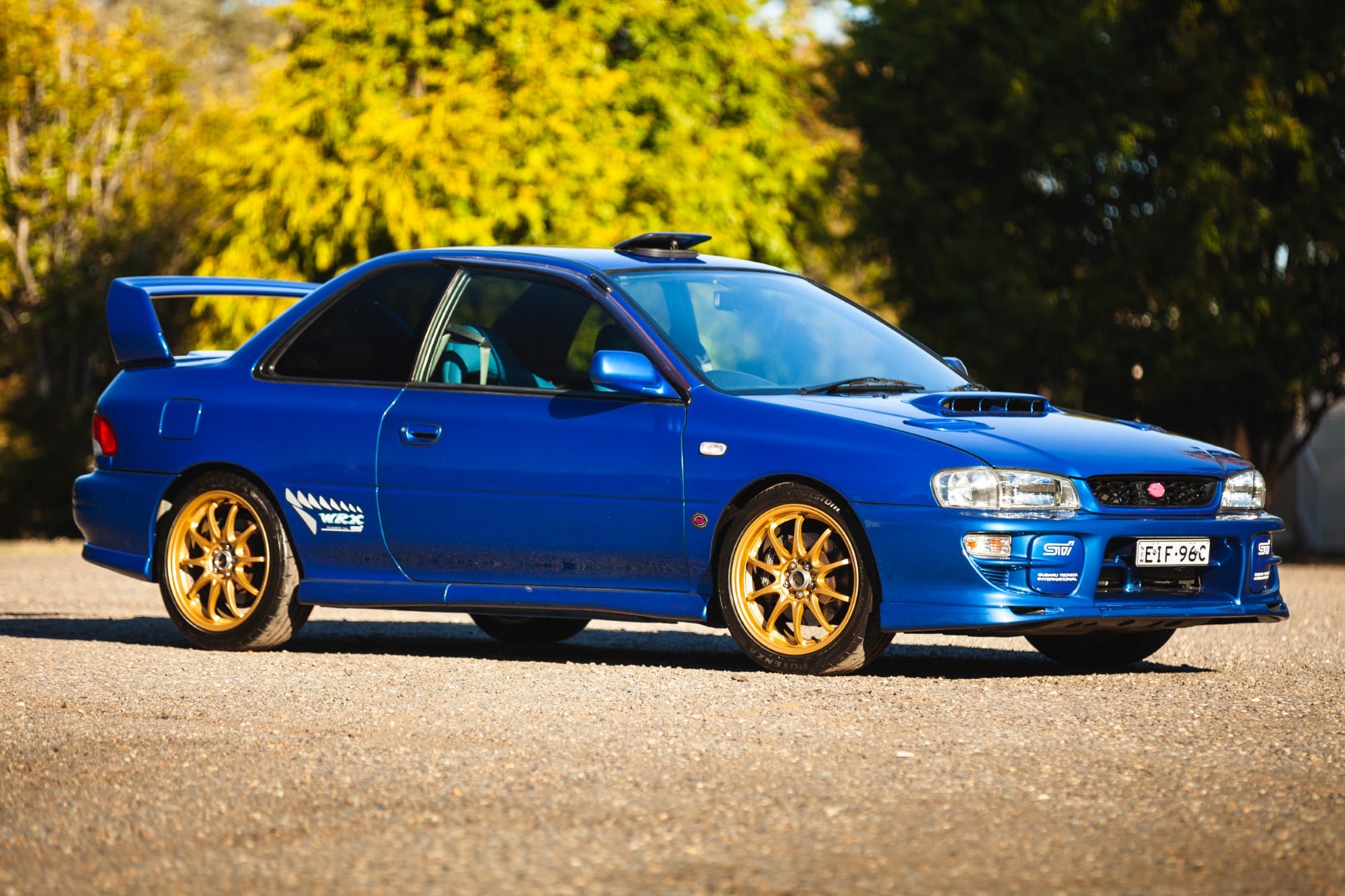
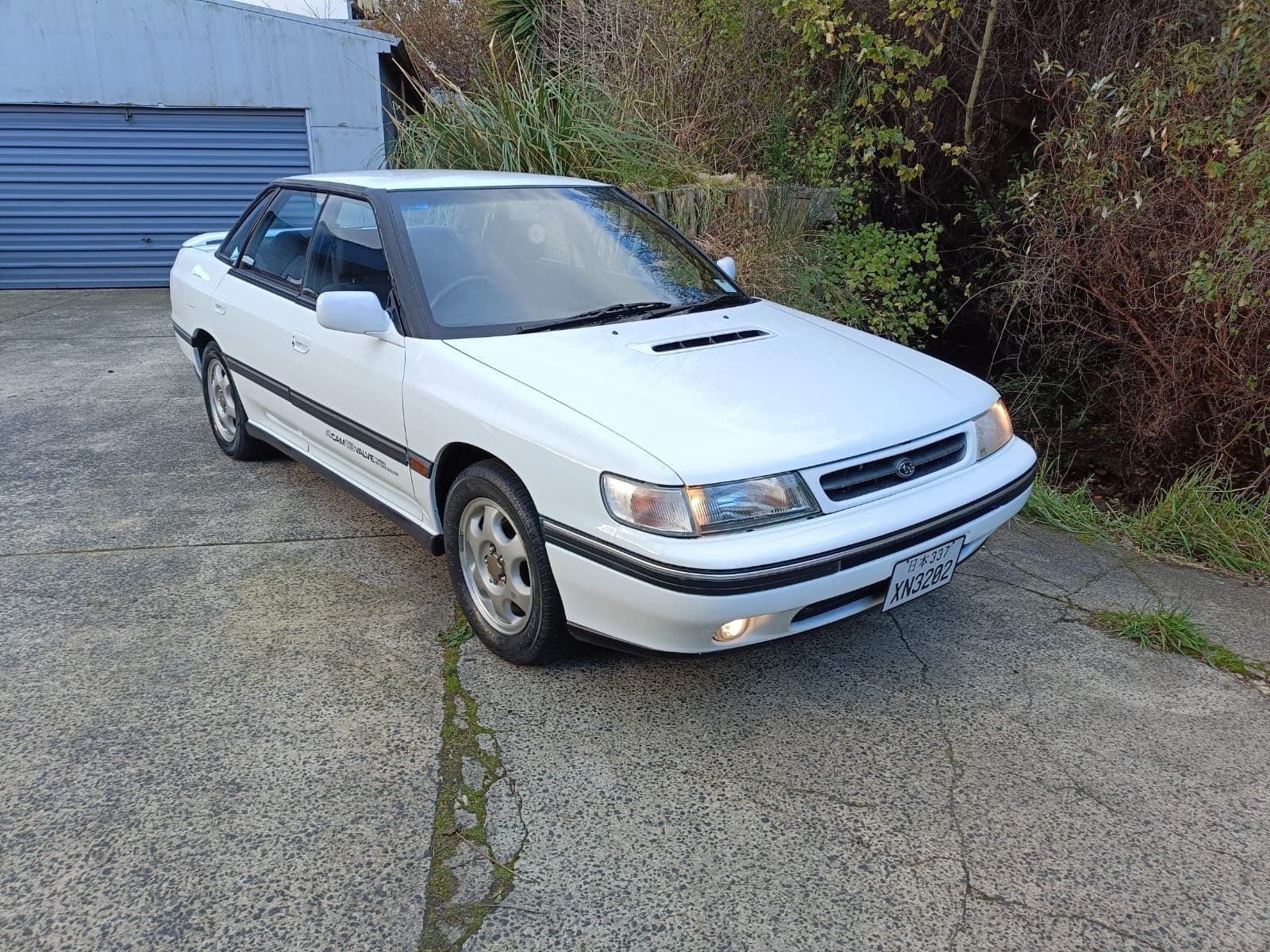
Subaru's Japan-market performance cars grew out of one engine and one rally program. The EJ20 flat-four arrived with the Legacy in 1989, and STI, founded a year earlier, turned it into a run of 280 PS (206 kW) turbo cars that won three consecutive WRC manufacturers' titles. The archive holds the Legacy RS Turbo, the Impreza WRX STI (GC8), the Impreza 22B STi, the Impreza WRX STI Bugeye and the Legacy B4 Blitzen.

Subaru models at a glance

Subaru entries in the archive with chassis code, production years, engine and official power
ModelChassis codeYearsEnginePower
Subaru Legacy RS Turbo (BC5)BC51989-1994EJ20G turbocharged flat-four (DOHC 16v)220 PS (162 kW) @ 6,400 rpm (JDM RS/RA spec)
1990 Subaru Sambar Truck (KS3/KS4)KS31990-1999EN0740 PS (carburetor); 55 PS at 6,200 rpm (supercharged); 46 PS (fuel injection, from 1995)
Subaru Impreza WRX STI (GC8)GC81992-2000EJ207 turbocharged flat-four (also EJ20G, EJ20K, EJ22G variants)280 PS (EJ207 STI); 280 PS/276bhp at 6,000 rpm (22B EJ22G)
Impreza 22B STiGC81998EJ22276 hp
2000–2002 Subaru Impreza WRX STI (GDB) BugeyeGDB2000-2002EJ207276-280 PS (Japan); 261-265 bhp (UK); 260-280 hp (Europe/Oceania)
Legacy B4 BlitzenBE52000-2003EJ208276 hp

Subaru in Japan: STI, Limited Runs and What Left the Country

STI was founded on April 2, 1988 with five staff under Ryuichiro Kuze, a veteran of Subaru's Safari Rally program. Its first job was the Legacy: in January 1989, before launch, three RS turbo sedans ran 100,000 km at the Arizona Test Center in 18 days at an average of 223.345 km/h, an FIA world record. The Legacy RS went on sale on February 1, 1989, and the RS type RA followed in November with a first series of 100 cars.

The Impreza went on sale on November 2, 1992 with a 240 PS (177 kW) WRX. The WRX STi arrived in January 1994 at about 100 cars a month, and the GC8 ran through Versions II to VI until July 2000. The 22B of March 1998 sold its 400 Japanese cars at ¥5,000,000 each within two days. The second-generation Bugeye STI followed on October 24, 2000.

Much of this stayed home. North America never received the first-generation WRX, and got the WRX only for the 2002 model year and the STI for 2004. The Legacy RS reached Europe and Oceania but not the US; Australia called it the Liberty because the Legacy name belonged to a veterans' charity. The B4 Blitzen, a Porsche Design collaboration sold from February 2000 at ¥3,000,000, was Japan-only, as were the STI S201 (GC8), S202 (GDB) and Legacy S401 (BE5).

The EJ20, DCCD and the 280 PS Flat-Four

The EJ20 is a 1,994 cc aluminum flat-four with a 92.0 x 75.0 mm bore and stroke, introduced in January 1989 and built until March 2020. The turbocharged EJ20G in the Legacy RS made 220 PS (162 kW) at 6,400 rpm and 27.5 kgm (270 N·m), and launched the Impreza WRX at 240 PS. Japanese sources credit the second-generation Legacy GT-B (BG5) as the first mass-production 2.0-liter car to reach 280 PS (206 kW), using a sequential twin turbo with two different-sized turbochargers.

The Impreza got there in 1996. The GC8 moved from the EJ20G to the EJ20K at applied model D, and the STi Version III was rated 280 PS at 6,500 rpm with 35.0 kgm (343 N·m). The EJ207 arrived with Version V in 1998 and carried into the Bugeye at 280 PS at 6,400 rpm through an STi-engineered six-speed. The 22B is the exception: its EJ22G was bored to 2,212 cc for 280 PS at 6,000 rpm and 363 N·m.

  • DCCD: The driver-controlled center differential debuted on the STI Type RA and worked with ABS from the Bugeye.
  • Twin turbo: The B4 Blitzen used the EJ208 sequential twin turbo, 280 PS manual and 260 PS (191 kW) automatic.
  • End of the line: The EJ20 Final Edition (VAB) closed orders on December 23, 2019 after 555 cars.

Motorsport: Group A Legacy, Impreza 555 and Three Titles

Subaru's WRC program was a partnership between STI and Prodrive, formed in 1989 and based in Banbury, England. Prodrive's first car was the Group A Legacy RS, homologated in January 1990. Colin McRae gave Subaru its first world rally win in the Legacy RS at the 1993 Rally New Zealand, and the Impreza 555, named for its State Express 555 sponsor, debuted at Rally Finland the same year.

The GC8 era delivered Subaru's titles. McRae won the drivers' championship in 1995, and Subaru took the manufacturers' title in 1995, 1996 and 1997, the only Japanese maker to win three in a row. The WRC97 was based on the two-door Impreza WRX STi Type R (GC8), and the 22B was built to mark the third title and Subaru's 40th anniversary. It was not a homologation car: a contemporary review called it a marketing exercise to sell a road car. Richard Burns won the 2001 drivers' title on the GDB platform, Petter Solberg won in 2003, and Subaru announced its withdrawal on December 16, 2008.

The B4 Blitzen has no competition record. STI's later circuit work was the Nürburgring 24 Hours, where the WRX STI won its class six times between 2011 and 2019.

Reading Subaru Chassis Codes and STI Names

Subaru codes start with a series letter, then a body letter, then a number. For the Impreza, G is the series, GC is a sedan or coupe and GF a wagon, and the third character follows the North American displacement scheme: 2 for 1.8 liters, 4 for 2.2, 6 for 2.5 and 8 for the 2.0 turbo. So every turbo sedan from 1992 to 2000, including the two-door 22B, is a GC8. A fourth letter, the applied model, marks each year's update: Versions I to VI run GC8-B to GC8-G, and the Bugeye is GDB applied A and B.

The Legacy follows the same pattern: BC and BF for the first-generation sedan and wagon, so the Legacy RS is BC5, and BE and BH for the third generation, so the Blitzen is BE5. Japanese sources do not explain the number.

  • STi Version: First-generation STi cars are numbered I to VI; product names used a lowercase i until April 24, 2005.
  • Type RA: A stripped motorsport grade with less soundproofing, manual windows and no air conditioning. The sources reviewed do not expand the letters.
  • B4 and RSK: BOXER plus 4WD, and Rally Sport Kompressor, the Kompressor being the twin turbo.
  • 22B: 22 for the 2.2-liter engine; English sources add that 22B is hexadecimal for 555.
  • Blitzen: German for lightning.

Buying and Importing a JDM Subaru

The US 25-year rule counts from each car's date of manufacture. Every Legacy RS (from February 1989) and every GC8 (production ended July 2000) is now eligible, and the 22B, built March to August 1998, has been eligible since 2023. The Bugeye STI started in October 2000, so the earliest cars qualified in late 2025 and the last pre-facelift cars follow by November 2027. The B4 Blitzen sold from February 2000 has qualified since February 2025. How to Import a JDM Car to the USA covers the process.

The sources reviewed for this page found no Subaru or STI reproduction-parts program, so support comes from the aftermarket and used stock. STI limited editions are the scarce ones: 300 S201 and 400 S202 Imprezas, and 286 Legacy S401s. A Legacy B4 RSK (BE5) gives most of the Blitzen's hardware without the limited-run premium.

  • Head gaskets: Specialist advice on the GC8 puts replacement at $3,000 to $5,000 past 100,000 miles.
  • DCCD: Not every Bugeye STI has it; Spec C configurations and the 16-inch RA differ, so check the build.
  • Twin turbo: The B4's sequential system is the final version of a layout that had switchover issues in earlier Legacies.
  • Paperwork: NHTSA counts 25 years from the label date, or from first-sale or registration documents if the label is missing.

FAQs

What does GC8 mean on a Subaru Impreza?

GC8 is the model code for every turbocharged first-generation Impreza sedan and coupe sold in Japan from 1992 to 2000, including the WRX STI and the two-door 22B. G is the Impreza series, C is the sedan or coupe body (F is the wagon), and 8 is the 2.0-liter turbo in Subaru's displacement scheme. A trailing letter, A to G, marks the year's applied model.

Which Subaru JDM cars are 25 years old in 2026?

Under the US 25-year rule, counted from the date of manufacture, every Legacy RS Turbo, every first-generation Impreza WRX STI and every 22B is eligible. The Bugeye STI began in October 2000, so cars built through November 2001 qualify during 2026. The 2000 and 2001 Legacy B4 Blitzen editions also qualify. The JDM Cars Turning 25 in 2026 guide lists the dates.

Was the Subaru 22B a homologation special?

No. The 22B was built from March to August 1998 to mark Subaru's 40th anniversary and its third consecutive WRC manufacturers' title, with 400 cars for Japan and 24 for export and prototypes. Group A rules did not require it, and a contemporary review described it as a marketing exercise to sell a road car. Its wide body came from the WRC97, which was based on the two-door GC8.

What does STi stand for and why is the i lowercase?

STI is Subaru Tecnica International, Subaru's motorsport and tuning arm, founded on April 2, 1988. Product names such as the Impreza WRX STi and the 22B STi used a lowercase i until April 24, 2005, when the badge was unified with the company abbreviation STI. STI tuned its first road car, the Legacy RS type RA, in December 1989.

What does B4 mean on a Subaru Legacy?

B4 is officially BOXER plus 4WD, Subaru's name for the third-generation Legacy sedan sold in Japan from December 1998. Japanese sources add a second reading of Berlinetta plus four doors. The Legacy B4 Blitzen was the Porsche Design edition of the B4 RSK, whose RSK badge stands for Rally Sport Kompressor, the Kompressor being its sequential twin turbo.

Was the first-generation Impreza WRX sold in the US?

No. North American markets never received the WRX version of the first-generation Impreza, so every GC8 WRX STI and 22B in the US is an import. The 227 hp WRX reached US showrooms for the 2002 model year, and the WRX STI was delayed until 2004, which means the Bugeye STI was never sold there either.

Did the Gentleman's Agreement limit Subaru to 280 PS?

Yes for catalog cars. The Impreza WRX STi reached 280 PS (206 kW) in 1996, and the 22B, Bugeye STI and Legacy B4 Blitzen carried the same figure. STI, not a JAMA member, sold the S201 at 300 PS and the S202 at 320 PS as modified cars outside the agreement. Japan's Gentleman's Agreement Explained covers the rule.

What was the Legacy's 100,000 km record?

In January 1989, before the Legacy RS went on sale, STI ran three Japanese-spec RS turbo sedans at the Arizona Test Center near Phoenix for over 18 days. They covered 100,000 km at an average of 223.345 km/h (138.78 mph), setting an FIA world endurance record. The program was STI's first project, and STI then tuned the RS type RA that followed in November 1989.