Nissan Silvia S13
シルビア (S13)
Editorial review
- 型式Chassis
- S13
- 製造者Maker
- Nissan
- 年式Years
- 1988–1998
- 用途Class
- Drift
参考動画Reference footage
The Nissan Silvia S13 is a rear-wheel-drive sports coupe launched in mid-1988 for the 1989 model year, sold globally under three names — Silvia, 180SX, and 240SX. Built on a platform derived from the Nissan Cefiro (A31), it introduced Nissan's multi-link rear suspension and the SR20 engine family that would define the brand's compact sports cars into the next decade. The S13 won the Car of the Year Japan Award at its debut and later became one of the foundational chassis of organized drifting.
諸元Specification of record
- 原動機Engine unit
- SR20DET (originally CA18DET/CA18DE, later SR20DE/SR20DET; USDM used KA24E/KA24DE)
- 総排気量Displacement
- 2.0L (SR20) / 1.8L (CA18) / 2.4L (KA24, USDM)
- 最高出力Power
- 205 hp (151 kW) @ 6,000 rpm (SR20DET Redtop)
- 最大トルクTorque
- 203 lb-ft (275 N·m) @ 4,000 rpm (SR20DET Redtop)
- 駆動方式Drivetrain
- Rear-wheel drive
- 変速機Transmission
- 5-speed manual (automatic also offered on some trims)
- 車両重量Kerb weight
- approx. 1,090 kg (early NA coupe) to 1,170–1,270 kg (turbo/Super HICAS 180SX)
Few chassis codes carry as much weight in enthusiast circles as S13. Sold simultaneously as the Silvia, 180SX, and 240SX depending on hemisphere, it was Japan's Car of the Year the moment it landed in dealerships — then went on to become something the judges could never have anticipated: the backbone of an entire motorsport discipline.
This is the story of the platform that gave Nissan its multi-link rear suspension, its SR20 engine family, and — through a chain of magazine-sponsored events and VHS tapes — the foundation of competitive drifting itself.
来歴History & Motorsport Heritage
Nissan replaced the S12-generation Silvia with the S13 in May 1988, and the car reached Japanese showrooms in time to be judged the Car of the Year Japan winner that same year. Underneath the new sheet metal sat a platform shared with the first-generation Cefiro (A31), giving the S13 a chassis pedigree distinct from the more utilitarian S12 it replaced.
Nissan sold the car under three different names depending on market and body style. In Japan, the notchback coupe kept the Silvia name across J's, Q's, and K's trim levels, with fixed headlights and no "SX" suffix. A hatchback version with pop-up headlights was sold domestically and in Europe as the 180SX. North America received all S13 body styles under a single name, the 240SX, fitted with Nissan's KA24 four-cylinder rather than the CA or SR engines used everywhere else. European buyers knew the hatchback as the 200SX.
The S13's motorsport story runs in two directions — circuit racing and the birth of competitive drifting.
On track, Nissan and NISMO built S13-based Silvias for the inaugural 1993 Japan GT Championship (JGTC), supplying bodies and engines to private teams. In North America, the racing effort looked nothing like the road car: the IMSA GTU-class 240SX built for driver Bob Leitzinger used a tube-frame chassis that shared only its roofline and taillight lenses with a production S13, powered by a naturally aspirated Nissan VG30 V6 producing roughly 340 horsepower. That program delivered results: Nissan won the 1988 IMSA GTU championship with Bob Leitzinger (Mazda's only off-year in the class during that era), Leitzinger-run 240SX cars won four consecutive IMSA GTU class championships from 1991–1994, and chassis LR-001 alone was entered in nearly 80 events across its racing life.
Some sources also credit factory-backed S13 teams with Super Taikyu class wins in 1990 and 1992, and podium finishes against BMW M3 and Mercedes 190E rivals under Group A rules in Australian and Japanese series. These claims appear only in lower-tier sources and have not been independently corroborated, so they should be treated as unverified rather than established fact.
On the drift side, the S13's cultural weight is harder to dispute. Carboy magazine staged the first organized drift event in 1986, and by 1988 the magazine had teamed with Video Option editor Daijiro Inada to launch Ikaten, a second sanctioned drift contest that fed directly into what became D1 Grand Prix. Keiichi Tsuchiya, who first gained notice through the 1987 video "Pluspy," moved into Silvia and related S-chassis cars for magazine and video work in the early 1990s while also serving as a Nissan factory driver in the Japanese Touring Car Championship and at Le Mans. Tsuchiya and Inada ran an informal professional drifting contest in 1999 and 2000 before reorganizing it into a five-round series; sources differ on whether the D1 Grand Prix name and format formally launched in 2000 or 2001.
Once D1GP was running, the S13 was reportedly the dominant chassis of the early field, with drivers including Katsuhiro Ueo, Nobushige Kumakubo, and Takahiro Imamura building their careers on S13-based cars — though this detail comes from a lower-confidence source and the driver-chassis pairings deserve independent verification before being treated as definitive record.
希少性Exclusivity & Production Run
Production dates and total output for the S13 family are inconsistently reported, and the figures below should be read with that caveat in mind.
Production windows by body style: JDM Silvia notchback coupe, roughly 1988–1993/1994; 180SX hatchback, March 1989 – December 1998; 240SX, 1988–1998 across two structurally different generations — S13 (1989–1994) and S14 (1994–1998).
Total production figures conflict significantly between sources. One source claims combined S13/180SX/240SX global production exceeded 500,000 units, though this figure comes from a lower-quality SEO source and should be treated cautiously. A specialist JDM production tracker cites a JDM-only Silvia S13 total of 302,761 units, but flags an unresolved conflict with a separate archive figure of 298,904 units compiled from per-prefix VIN tables. Neither number has been corroborated against a primary Nissan document. Of the tracked production data, visible color-code records sum to 302,640 units, with 121 additional records of unknown chassis-prefix assignment (69 S13, 27 KS13, 13 PS13, 12 KPS13).
Rare and limited variants include: the Autech convertible, offered briefly early in the production run and converted by Autech Japan with manufacturing handled by Takada Kogyo starting July 1988 — only 603 units were built across five color codes (430 Velvet Blue, 50 two-tone Lime Green, 70 two-tone Warm White, 40 Cranberry Red, 10 Dark Green), plus three special-order units in unrecorded colors, with high cost (3.25 million yen in 1988), extra weight, and chassis flex keeping demand low; the A's ("Almighty") base trim, introduced in late 1992 to replace the J's trim, with some sources citing a production run of fewer than 150 units, available only with the naturally aspirated SR20DE and 5-speed manual on 15-inch alloys but without power windows or a sunroof; Super HICAS turbo cars, with only 195 Juniper Green (color code DH0) factory turbo Silvias built with Super HICAS four-wheel steering; and the Sileighty, of which Japanese tuner Kid's Heart built 500 official 180SX/Silvia hybrid units on the 1998 180SX platform, transplanting the Silvia's headlights, front fenders, hood, and front bumper onto the hatchback's chassis.
North American 240SX buyers never had access to a factory-turbo S13 — the SR20DET was never fitted to the US-spec car. Anyone seeking a factory-turbocharged S13 in North America is looking at a gray-market JDM import, either a Silvia K's or a 180SX, which only became legally importable once the earliest 1988–1989 cars crossed the 25-year federal exemption threshold in 2013.
意匠Aerodynamics & Design Philosophy
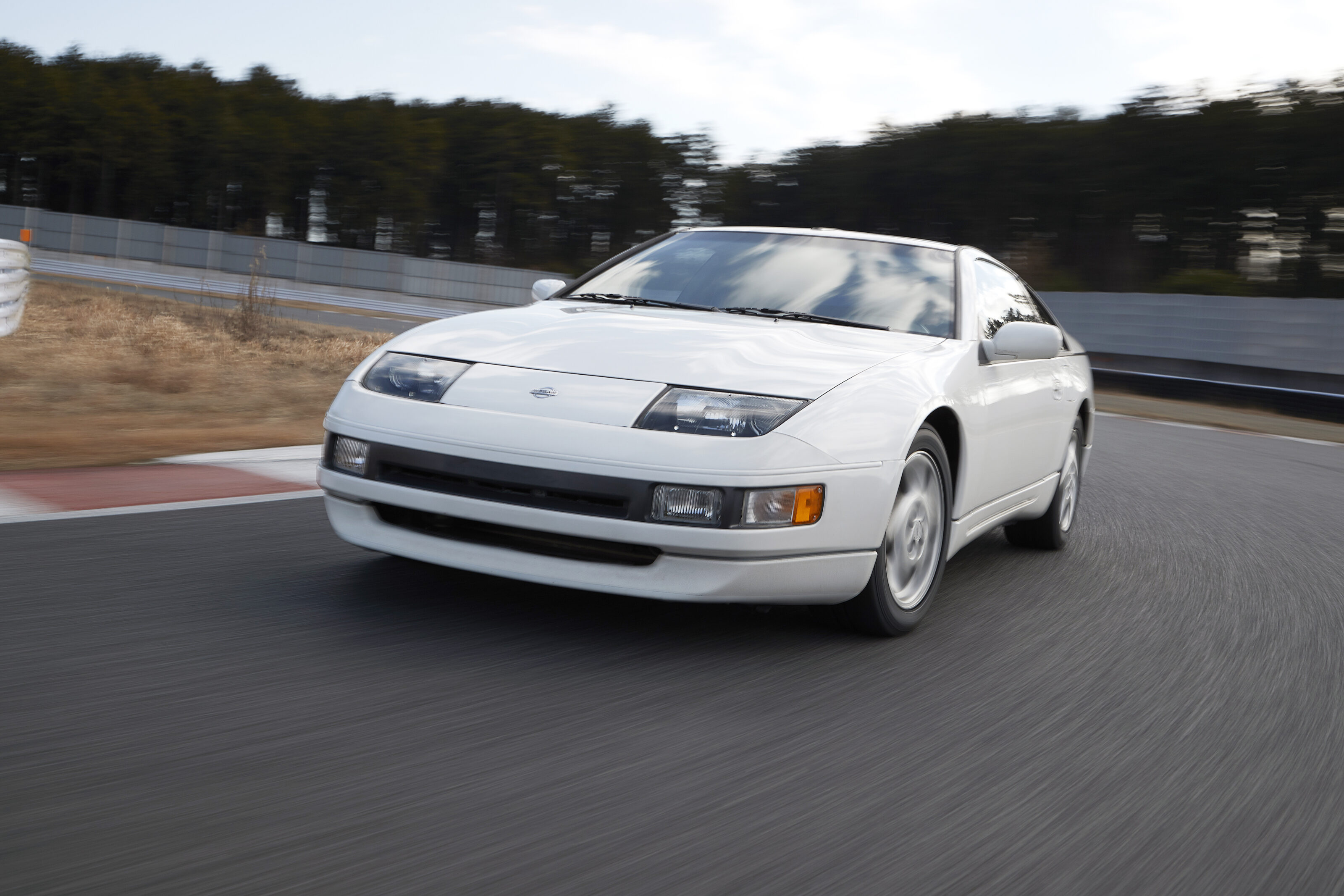
The S13 replaced the S12's boxier lines with what contemporary sources describe as simpler, more free-flowing bodywork, and overall length grew noticeably over its predecessor. Nissan split the design language by body style: the Japanese-market Silvia coupe used projector headlamps in a fixed housing, while the 180SX/200SX/240SX hatchback used pop-up headlights that rotate to reveal dual circular units — still the car's most recognizable visual signature on hatchback variants. Both bodies share the same long-hood, short-deck proportions typical of front-engine, rear-drive sports coupes of the era.
Aerodynamic figures for the S13 vary depending on source and are largely forum-derived rather than published by Nissan, so precise comparisons should be treated as approximate. One frequently cited figure for the fastback places its drag coefficient at 0.31, with a center of gravity rating of 0.29 and a skidpad figure of 0.89g on stock SE suspension. A separate discussion thread lists the coupe at 0.32 Cd, while another source found figures of 0.30–0.31 for the "pignose" notchback variant. General consensus among owners is that the hatchback body is somewhat more aerodynamically efficient than the notchback coupe, since the coupe's rear glass creates a low-pressure area behind it — though the practical difference is considered small.
Because the Silvia coupe and 180SX hatchback used entirely different front-end designs, swapping one onto the other became a popular Japanese custom practice. The reverse of the Sileighty — installing a 180SX front end onto a Silvia coupe body — is known as the Onevia. Unlike the factory Sileighty, the Onevia was never sold as a complete production car; it exists purely as an aftermarket conversion. Notably, the North American 240SX notchback was essentially a left-hand-drive Silvia body fitted from the factory with the 180SX/240SX nose, making it a factory equivalent of what Japanese tuners would later create by hand.
機関SR20DET (originally CA18DET/CA18DE, later SR20DE/SR20DET; USDM used KA24E/KA24DE) · Powerplant
Nissan launched the S13 with the CA18 engine family. The naturally aspirated CA18DE, fitted to J's and Q's trims, produced 133 hp and 117 lb-ft of torque. The turbocharged CA18DET, reserved for the range-topping K's trim and standard in the 180SX hatchback, added 33 hp and 51 lb-ft over the naturally aspirated unit.
In January 1991, Nissan replaced the CA18 family entirely with the 2.0-liter SR20 engine — the SR20DE naturally aspirated and SR20DET turbocharged. The late-model turbo K's, paired with the T25G turbocharger, optional viscous limited-slip differential, and Super HICAS, is the specification most sought after by importers today.
SR20DET "Redtop" specifications (1991–1993 S13 Silvia/180SX): compression ratio 8.5:1; power 151 kW (205 hp) at 6,000 rpm; torque 203 lb-ft (275 N·m) at 4,000 rpm; Garrett T25G turbocharger at roughly 7 psi boost; "High Port" cylinder head design with non-variable timing camshafts and 370cc/min fuel injectors. One source lists slightly lower output for the same engine — 201 bhp at 6,000 rpm and 202 lb-ft at 4,000 rpm — a discrepancy that likely reflects differing measurement standards (bhp versus JIS net PS) rather than an actual mechanical difference.
Two color-coded revisions of the SR20DET circulated during S13 and 180SX production: the Redtop and Blacktop. Despite the different valve-cover colors, there is no measurable performance difference between them — the changes amount to a revised ECU calibration, an updated wiring harness, and a larger oxygen sensor.
Export markets received different engines entirely. The European 200SX used the CA18DET exclusively, rated at 169 PS (167 hp), good for a 7.5-second 0–100 km/h time and a 220 km/h top speed. The USDM 240SX skipped the CA and SR families altogether: 1989–1990 models used the KA24E, a 2.4-liter SOHC inline-four making 140 hp, while 1991–1994 models used the dual-overhead-cam KA24DE making 155 hp.
Factory performance by JDM variant (third-party estimates, not Nissan-published): the K's with CA18DET (1988–1990) ran 0–60 mph in 7.3 seconds with a 137 mph top speed, 173 hp at 6,400 rpm and 166 lb-ft at 4,000 rpm; the Q's with SR20DE (1991–1993) ran 0–60 mph in 8.2 seconds with a 127 mph top speed, 138 hp at 6,400 rpm and 131 lb-ft at 4,800 rpm; the K's with SR20DET (1991–1993) ran 0–60 mph in 6.3 seconds with a 143 mph top speed, 202 hp at 6,000 rpm and 203 lb-ft at 4,000 rpm.
Curb weight varies considerably by trim and equipment, ranging from roughly 1,090 kg for an early naturally aspirated coupe up to 1,170–1,270 kg for turbocharged and HICAS-equipped 180SX variants — Super HICAS hardware alone adds noticeable mass over the standard rear suspension.
The SR20DET has a well-documented reliability window of around 150,000 km with proper maintenance, and its primary failure point at elevated power is connecting-rod failure; stock rods are not generally considered safe for sustained output above roughly 300–320 wheel horsepower. Within the drift community, tuned SR20DET builds in the 400–600 hp range are common, with a widely cited maximum build reaching approximately 900 hp on the stock architecture, though competitive D1 Grand Prix cars typically run closer to 600–700 hp. These figures come from enthusiast and drift-industry sources rather than controlled engineering data. The earlier CA18DET, when fitted with an upgraded turbocharger, is cited as capable of up to 330 PS while retaining its stock internals.
車台Chassis, Suspension & Handling Dynamics
The S13 was one of the first Nissan production cars to use multi-link rear suspension, a layout previewed in concept vehicles like the Nissan MID4 before reaching series production. Up front, the car used conventional MacPherson struts. This combination — struts up front, multi-link at the rear — gave the S13 a chassis balance that owners and testers have described as unusually communicative for the era, letting drivers feel connected to the road surface through the wheel and seat.
Nissan also introduced four-wheel steering on the S13, badged HICAS-II at launch and renamed Super HICAS after an update in 1990. A viscous limited-slip differential was offered on select models, improving traction under power in a chassis that would go on to become the default platform for early competitive drifting.
The MacPherson strut front end, while effective on the street, became a limiting factor when the Silvia was adapted for JGTC touring car competition, where the front suspension geometry constrained how far teams could push the chassis relative to purpose-built racing cars. On the street and in grassroots motorsport, however, the setup remains well regarded. A common (if unofficial) comparison among owners holds that the S13 handles better in stock form than its S14 successor, while the S13 hatchback ("S13FB") is generally considered to have a slight aerodynamic edge — both points originate from long-running owner forum discussion rather than published testing, so they represent community consensus rather than measured fact.
名義Nomenclature & Lore
Nissan's own heritage materials trace the Silvia name back to the first-generation CSP311, unveiled at the 1964 Tokyo Motor Show as the "Datsun Coupe 1500" before its 1965 release under the Silvia badge. According to Nissan's official company history, the name was chosen after Silvia, a goddess Nissan's materials describe as belonging to Greek mythology.
Standard etymological references complicate that account. Silvia is generally classified as a name of Latin origin, tied to the Roman forest deity Silvanus, and in Roman mythology Silvia (specifically Rhea Silvia) is known as the mother of Romulus and Remus — not a figure from Greek myth. At least one JDM-focused source repeats both claims simultaneously, describing the name as originating in Greek mythology while noting its etymology is Latin, which only underscores how widely this discrepancy has been repeated without resolution. Whether Nissan's own history department conflated Greek and Roman tradition, or whether "Greek" was simply an early translation error that stuck, remains unresolved — but it's worth noting when the "goddess" origin story comes up in enthusiast discussion.
Separately, the S13 was the first Silvia generation to use the J's, Q's, and K's trim-naming convention that would carry through later generations, with K's denoting the top, turbocharged specification.
相場Auction Records & Modern Market Value
Values for the S13 in international markets are shaped heavily by two factors: which body style and market a given car came from, and how many were built in that specification.
Because the USDM 240SX was never sold with the SR20DET, demand from North American enthusiasts for factory-turbocharged cars has been funneled almost entirely into gray-market imports of the JDM Silvia K's and 180SX. That demand only became legally satisfiable in the United States once the oldest 1988–1989 model-year cars crossed the 25-year import exemption in 2013, and subsequent model years have continued to age into eligibility since. This import window has kept steady pressure on the supply of clean, low-mileage JDM turbo cars entering the US market.
Scarcity plays an outsized role in value among specific variants. The 603-unit Autech convertible, the sub-150-unit late A's trim, and the 195-unit Super HICAS Juniper Green turbo cars all represent production runs small enough that surviving, unmodified examples are difficult to source regardless of market. The 500-unit factory Sileighty occupies a similar position — a factory-built hybrid that can't simply be replicated by swapping body panels onto a standard 180SX and calling it original.
Given the scale of decades-long drift and grassroots motorsport use, well-preserved, low-modification examples of any S13 variant — Silvia, 180SX, or 240SX — are increasingly uncommon, and unmolested cars with original drivetrains and interiors command a real premium over the modified track and drift builds that make up much of the remaining population.
継承Keeping the Legend Alive (Restomod & Specialist Culture)
Nissan's direct replacement for the S13 was the S14, produced from 1994 to 1998 as the second generation of the 240SX platform in North America and continuing the Silvia name in Japan. Under D1 Grand Prix competition, the S13 was reportedly the dominant chassis in the series' earliest years, with careers including those of Katsuhiro Ueo, Nobushige Kumakubo, and Takahiro Imamura beginning on S13-based cars — a claim that, as noted earlier, comes from a lower-confidence source and would benefit from independent confirmation before being treated as settled history.
The restoration and preservation scene around the S13 runs in parallel with its ongoing life as a drift and grassroots-racing platform. Factory oddities like the Sileighty and its owner-built counterpart, the Onevia, remain popular reference points for builders who want to replicate period-correct Japanese customization rather than a purely competition-focused build. The interchangeability between Silvia and 180SX front-end components — a byproduct of Nissan selling two different noses on the same platform — continues to make parts-swapping and restoration comparatively straightforward relative to more integrated platforms.
With JDM-only production estimated in the range of roughly 298,000 to 303,000 units (a figure still not corroborated against a primary Nissan document) and total S13/180SX/240SX output reportedly exceeding 500,000 across all markets, parts supply for the S13 remains broader than for lower-volume Japanese sports cars of the same era, supporting a restoration and gray-market import culture that continues to grow more than three decades after the car's 1988 debut.
問答Questions of record
問01What is the difference between the Nissan Silvia, 180SX, and 240SX?
They are all the same S13 platform sold under different names by market and body style: Silvia was the JDM notchback coupe with fixed headlights, 180SX was the hatchback with pop-up headlights sold in Japan and Europe, and 240SX was the North American version of all body styles fitted with Nissan's KA24 four-cylinder instead of the CA18 or SR20 engines.
問02How much power does the SR20DET engine make in the S13?
The SR20DET 'Redtop' used in the 1991–1993 S13 Silvia and 180SX produced 151 kW (205 hp) at 6,000 rpm and 203 lb-ft (275 N·m) of torque at 4,000 rpm, using a Garrett T25G turbocharger at roughly 7 psi of boost.
問03Did the North American 240SX ever come with a factory turbo engine?
No, the SR20DET was never fitted to the US-spec 240SX. Factory-turbocharged S13s are only available in North America as gray-market JDM imports of the Silvia K's or 180SX, legally importable once cars reach the 25-year exemption threshold.
問04How many Nissan Silvia S13 units were produced?
Production figures are disputed: a JDM-only specialist tracker cites totals around 298,904 to 302,761 units, while one lower-quality source claims combined global S13/180SX/240SX production exceeded 500,000 units. Neither figure has been corroborated against a primary Nissan document.
問05What is a Sileighty and an Onevia?
The Sileighty is an official 500-unit hybrid built by Japanese tuner Kid's Heart, grafting Silvia coupe front-end parts onto a 180SX hatchback chassis. The Onevia is the reverse aftermarket conversion — a 180SX front end fitted to a Silvia coupe body — and was never a factory-produced car.
問06Why is the S13 important to drifting?
The S13 became the platform of choice during the birth of organized drifting in Japan, with Keiichi Tsuchiya and Video Option's Daijiro Inada running early sanctioned contests that evolved into D1 Grand Prix, where S13-based cars were reportedly the dominant early chassis.
結 · IN CLOSING
The Nissan Silvia S13, launched in 1988, was sold globally under three names — Silvia in Japan, 180SX in Japan and Europe, and 240SX in North America — each with different engines and headlight designs. Japanese cars used the CA18 engine family before switching to the SR20DE and SR20DET in January 1991, with the SR20DET producing 205 hp and 203 lb-ft of torque. North American 240SX models used Nissan's KA24 four-cylinder instead and never received a factory turbo. Production totals remain disputed between sources, ranging from roughly 300,000 JDM-only units to over 500,000 across all global markets. Rare variants include a 603-unit Autech convertible, a sub-150-unit late A's trim, and just 195 Super HICAS-equipped turbo cars in Juniper Green. Beyond its road-car history, the S13 became foundational to competitive drifting through Keiichi Tsuchiya and the early events that led to D1 Grand Prix, while also winning IMSA GTU championships in the United States. Its multi-link rear suspension, Super HICAS four-wheel steering, and broad parts availability keep it active in both restoration and motorsport circles today, particularly among gray-market importers taking advantage of the US 25-year import rule.
この項目についてAbout this entry
Specification figures are cross-checked against factory data and period source material. Editorial is researched and reviewed before publication; drafting and formatting may be assisted by tooling, but accuracy checks rest with the editorial desk. This entry was last reviewed in August 2026. Spotted an error? Send a correction →
.jpg?t=171699826942)
